Collateral Reviewed
Farm Tractor Refinancing value, payoff, age, hours or mileage, attachments, condition, and remaining useful life.

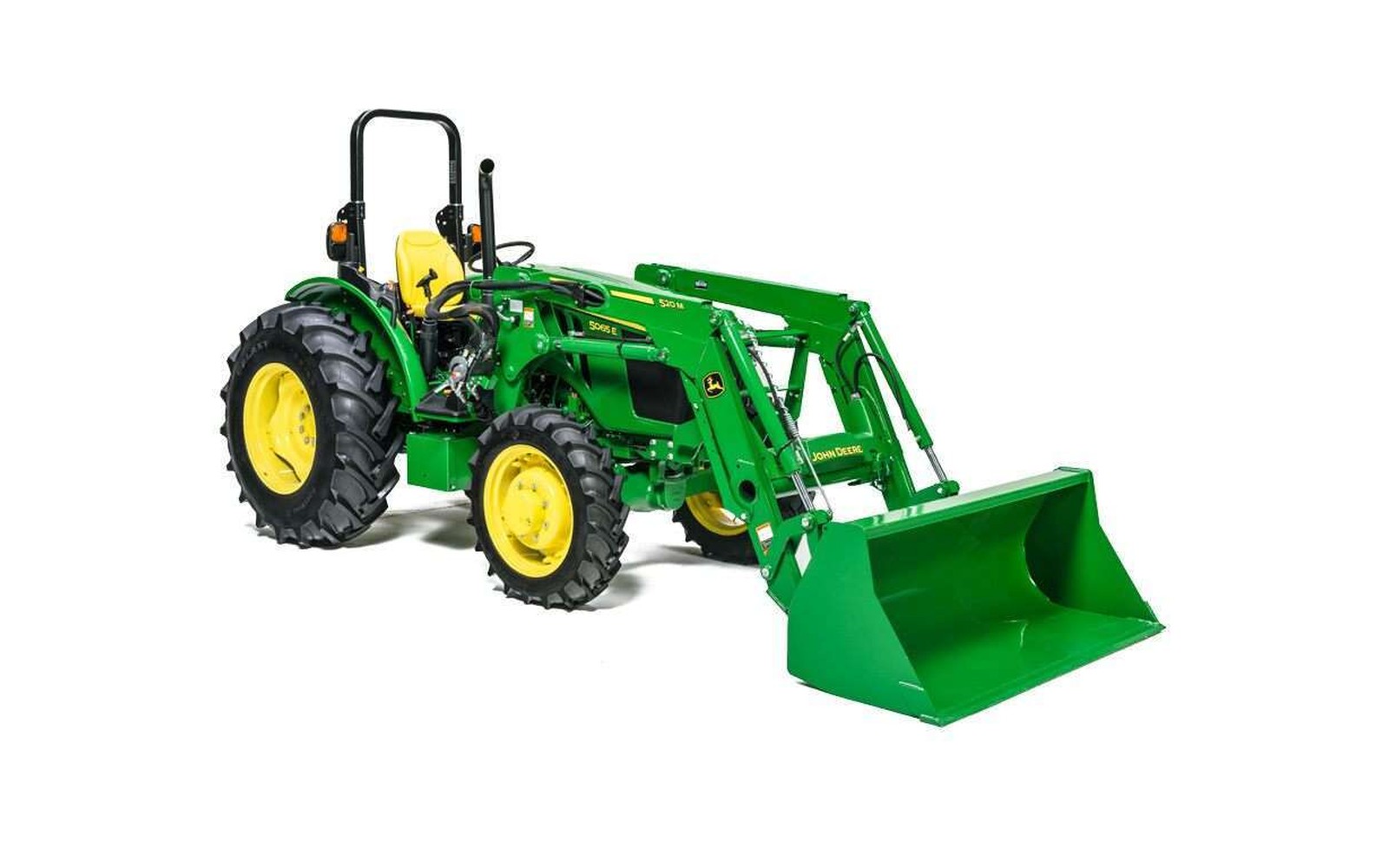
Cash comes in at harvest and goes out all year. A farm tractor you have been making payments on for two or three seasons has built equity that does not have to sit idle between planting and fall. Refinancing converts that equity into operating capital, or it restructures an original dealer note into a payment that actually fits your cash flow cycle. The tractor stays in the field. The financial burden changes.
We work with row-crop producers, livestock operators, and diversified farm operations. Cash-out equipment refinancing on farm tractors closes in one to two weeks on an application-only basis up to approximately $400,000, covering most row-crop and utility tractors in the 100 to 400 horsepower range. The minimum deal starts at $50,000. A John Deere, Case IH, or New Holland tractor with solid hours and a current service record is a straightforward refinancing candidate.
Agricultural tractor values are well-documented in machinery guides that reflect seasonal market patterns, regional demand, and equipment configuration. Horsepower is the primary sizing parameter, but configuration drives as much value as horsepower. A row-crop tractor with front-wheel assist, a full complement of hydraulic remotes, and precision ag compatibility (GPS steering ready, auto-steer-compatible) appraises above a comparable-horsepower utility tractor without those features.
Engine hours are the primary wear indicator. Row-crop tractors used only during planting, spraying, and harvest seasons typically accumulate 400-600 hours per year, putting a five-year-old machine in the 2,000-3,000 hour range. A tractor with documented preventive maintenance at the appropriate hour intervals, including fluid changes, filter records, and any major component work, appraises in the stronger range for its age and hour bracket.
Cab condition matters to secondary buyers and therefore to lenders. A tractor with a clean cab, functional air conditioning and heat, and intact electronics (GreenStar, AMS, or equivalent precision guidance systems) appraises at a premium over the same tractor with a deteriorated cab or non-functional precision systems. Operators who maintain the cab environment protect both the operator and the resale value.
Four-wheel drive or mechanical front-wheel drive (MFWD) configurations generally hold higher values than two-wheel drive in the same horsepower range because the additional traction capability expands the buyer pool across more soil types and applications. Specialty tractors configured for orchard, vineyard, or high-clearance applications serve a specific market and require specialized appraisers familiar with those operations.
Row-crop producers who financed their tractors through dealer captive programs at the time of purchase often carry rates that reflect the financing terms available at that point in time, not necessarily the best market rate. Two or three seasons of on-time payments change the credit profile, and refinancing through an independent equipment lender can produce meaningful payment savings that help during lower-price-per-bushel years.
Livestock operations that use their tractors year-round for feed delivery, manure management, and pasture work accumulate hours faster than seasonal crop operators. A cow-calf operation that puts 800 hours per year on its utility tractor has a different refinancing timeline than a corn farmer who puts 400. The higher-hour tractor has less remaining equity for a given age, but if the business is strong and the tractor is well-maintained, the deal is still workable.
Agricultural operators in farming and ag production across the Corn Belt, Great Plains, and specialty crop regions use tractor refinancing to manage the mismatch between capital commitments (made at equipment purchase) and cash-flow timing (concentrated at harvest). A seasonal payment structure that aligns payments with harvest receipts is sometimes available through specific lenders and worth asking about when the standard note structure creates a cash-flow pinch during off-peak months.
Farm operations that own tractors free and clear, either through completing a prior loan or buying at auction, can access the full appraised value through a Equipment Sale-Leaseback. The leaseback structure is particularly useful for operations that need cash for inputs, land improvements, or a new piece of equipment without taking on a conventional operating loan.
A leaseback on a $180,000 row-crop tractor you own free and clear produces $180,000 in lease proceeds (less financing costs) in your account at close. You continue using the tractor for the duration of the lease at fixed monthly payments. At the end of the term, you have the option to purchase the tractor back at a predetermined residual or turn it in. Compared to a cash-out refi, which would only advance against the equity above zero (since there is no payoff), the leaseback can generate more cash from the same asset.
Tell us the horsepower, year, brand, hours, and current payoff. We will build a refinancing structure around your tractor and your farm's cash-flow cycle. Equipment refinancing on agricultural tractors is a deal we close with knowledge of what the ag equipment market supports, not a generic commercial vehicle process applied to farm iron.
These are the underwriting points the desk uses to turn the taxonomy page content into a real cash-out structure.
Farm Tractor Refinancing value, payoff, age, hours or mileage, attachments, condition, and remaining useful life.
$400. The available cash is based on verified value minus the existing payoff.
One to two weeks.
Row-crop producers who financed their tractors through dealer captive programs at the time of purchase often carry rates that reflect the financing terms available at that point in time, not necessarily the best market rate.
The original purchase documentation is not required for refinancing. A clear current title in your name and the tractor's serial number are the ownership evidence the lender needs. Used-tractor purchases, including auction and private-party transactions, are refinanceable when the title is clean.
Tractors used for both own-farm operations and custom farming work are eligible for refinancing. Custom farming revenue that shows in bank statements can actually strengthen the application by demonstrating active utilization and commercial revenue generation above the farm's own crop income.
Integrated precision ag systems, particularly those with active subscriptions and documented configuration for the farm's field data, add to the tractor's appraisal value in the current market. The subscription status and hardware integration are worth noting in the appraisal documentation.
Yes. Cash from a refinancing or a cash-out structure is unrestricted business capital. Buying seed, fertilizer, herbicide, or any other input from the proceeds is a completely legitimate use. The lender does not restrict how you use the funds after they hit your account.
For application-only deals, the farm's overall debt structure is not the primary underwriting focus. The tractor's value and your business's operating revenue visible in bank statements are the core of the decision. For larger or more complex transactions, overall financial position may factor in, but a straightforward single-tractor refi under $400,000 typically does not require a full farm financial statement.
Send the machine, payoff, and target cash-out amount. We will review the file and come back with rate, term, payment, and net proceeds.
Tell us what you are buying, who is selling it, and when you need it earning. We will review the file and point you to the next step.