Collateral Reviewed
Machine value, payoff, lien position, hours or mileage, condition, and secondary-market demand.

Two lease types, two very different outcomes on your balance sheet and your tax return. Picking the wrong one costs you money. Picking the right one saves it. The distinction between a capital lease and an operating lease is not just accounting jargon. It determines how the asset appears on your books, how the payments get treated at tax time, and who owns the machine at the end of the term.
Most equipment buyers asking this question are either working through a Equipment Sale-Leaseback structure or looking at a lease as an alternative to a standard loan. Either way, the lease type you choose shapes the economics. We will walk through both structures so you know exactly which one fits your situation before you sign anything.
A capital lease, now formally called a finance lease under current accounting standards, is structured so that the lessee bears most of the risks and rewards of ownership. From an accounting perspective, the asset goes on your balance sheet as if you bought it. The corresponding obligation also shows up as debt. You record depreciation on the asset just as you would for owned equipment.
The clearest signal that you are looking at a capital lease is the end-of-term buyout. A $1 buyout at the end of a term is the textbook capital lease. The lender will also charge higher payments relative to a fair-market-value lease because there is no residual left over. You are paying off the full cost of the equipment over the lease term.
For construction contractors and manufacturers who want to own the iron outright at the end, a capital lease accomplishes that while still providing a structured payment plan. If Section 179 expensing is your goal, a capital lease qualifies. An operating lease typically does not, though bonus depreciation rules can vary by year.
An operating lease leaves the lender as the owner of the equipment throughout the term. The lessee gets use of the machine. At the end, the options are typically to renew the lease, return the equipment, or buy it at fair market value. The lender retains the residual value risk, which is why monthly payments under an operating lease are lower than a capital lease of the same term on the same equipment.
Under an operating lease, the asset does not appear on your balance sheet as owned property. The lease payment flows through as an operating expense. For businesses that want to keep their balance sheet lighter or that cycle through equipment frequently rather than holding it long-term, the operating lease is often the better fit. Trucking companies refreshing fleets on a three- to five-year cycle sometimes prefer operating leases precisely because they can hand back the equipment rather than managing resale.
The trade-off is that you build no equity in the asset under an operating lease. Every dollar of lease payment goes to the lender. At the end of the term, if you want to keep the machine, you buy it at market value, which may be substantially lower than the original purchase price or may not be.
Total cost comparison depends on how you count. An operating lease payment is lower month to month. But at the end of the term you own nothing. A capital lease payment is higher, but at the end you own the equipment. If the machine retains value, a capital lease wins on total economics. If the machine depreciates heavily and you would have just sold it at the end anyway for a fraction of the original price, the operating lease may be the better deal.
The after-tax picture also matters. Operating lease payments may be fully deductible as operating expenses. Capital lease payments are split between depreciation and implied interest. Your accountant can run the net present value comparison on both. The result varies meaningfully depending on your marginal tax rate and the equipment involved. We are not your tax advisor, but we see enough of these deals to tell you that the right answer is not always obvious without running the numbers.
For borrowers considering Section 179 deductions, a capital lease on qualifying equipment puts the full deduction in play in year one. That accelerated deduction changes the year-one cost picture significantly for profitable businesses.
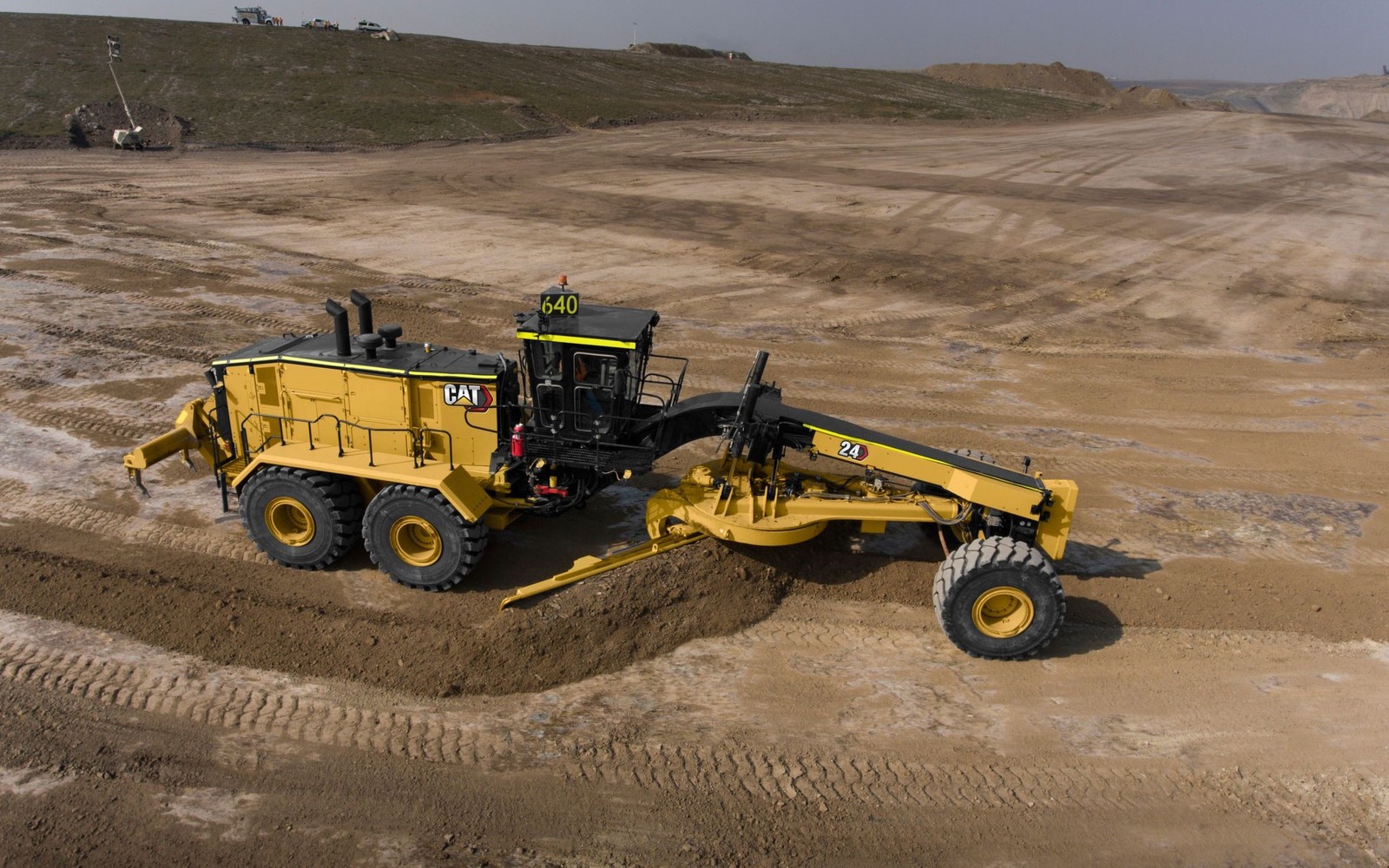
Ask for a capital lease if: you intend to keep the equipment for its full useful life, you want the Section 179 deduction, or you want a defined buyout at the end. Common on long-lived assets like a motor grader or a paver that you expect to run for ten-plus years.
Ask for an operating lease if: you cycle through equipment on a shorter schedule, you want lower monthly payments, or you want to keep long-term debt off the balance sheet for lending ratio reasons. More common on trucks and technology-dependent machines where regular upgrades make sense.
You can also ask us what the lender prefers on a specific asset. Some equipment types have liquid secondary markets that make the operating lease structure more attractive to the lender. Others do not, and the lender will push for a capital structure. Knowing what the market typically does with a given asset type helps us position the deal correctly.
Either structure can be paired with a Equipment Sale-Leaseback on equipment you already own. That combination unlocks cash from the asset while clarifying whether you want to reclaim ownership at the end or simply continue leasing.
These are the underwriting points the desk uses to turn the taxonomy page content into a real cash-out structure.
Machine value, payoff, lien position, hours or mileage, condition, and secondary-market demand.
$1. The available cash is based on verified value minus the existing payoff.
One to two weeks.
Working capital, down payments, debt cleanup, slow-season coverage, and project mobilization.
Yes. Under current accounting standards, a capital (finance) lease creates both an asset and a corresponding liability on your balance sheet. An operating lease treatment, depending on lease length, may also create a right-of-use asset. Confirm with your accountant how your specific lease will be classified.
Generally yes for a capital lease on qualifying equipment, provided you are treated as the owner for tax purposes. Operating leases typically do not qualify. Your tax advisor should confirm before you commit to a structure.
Usually yes, at the fair market value at the time of purchase. The buyback price is not predetermined in an operating lease. It is based on what the equipment is actually worth when the lease ends.
Because the lender retains the residual value of the equipment at the end of the term. You are only financing the depreciation portion of the asset, not the whole cost.
It can. A capital lease adds debt to your balance sheet, which affects leverage ratios. An operating lease, depending on its structure, may not. Lenders looking at your financials will see the difference. For businesses concerned about borrowing capacity, the operating lease can keep ratios cleaner.
Tell us what equipment you are looking at, whether you want to own it at the end, and what your monthly budget looks like. We will match you to the right lease structure and show you both payment scenarios. Minimum $50,000. Funding in one to two weeks. Apply and a capital advisor follows up same day.
Tell us what you are buying, who is selling it, and when you need it earning. We will review the file and point you to the next step.