Collateral Reviewed
Peterbilt 389 Refinancing value, serial, configuration, hours or mileage, payoff, and comparable sales.

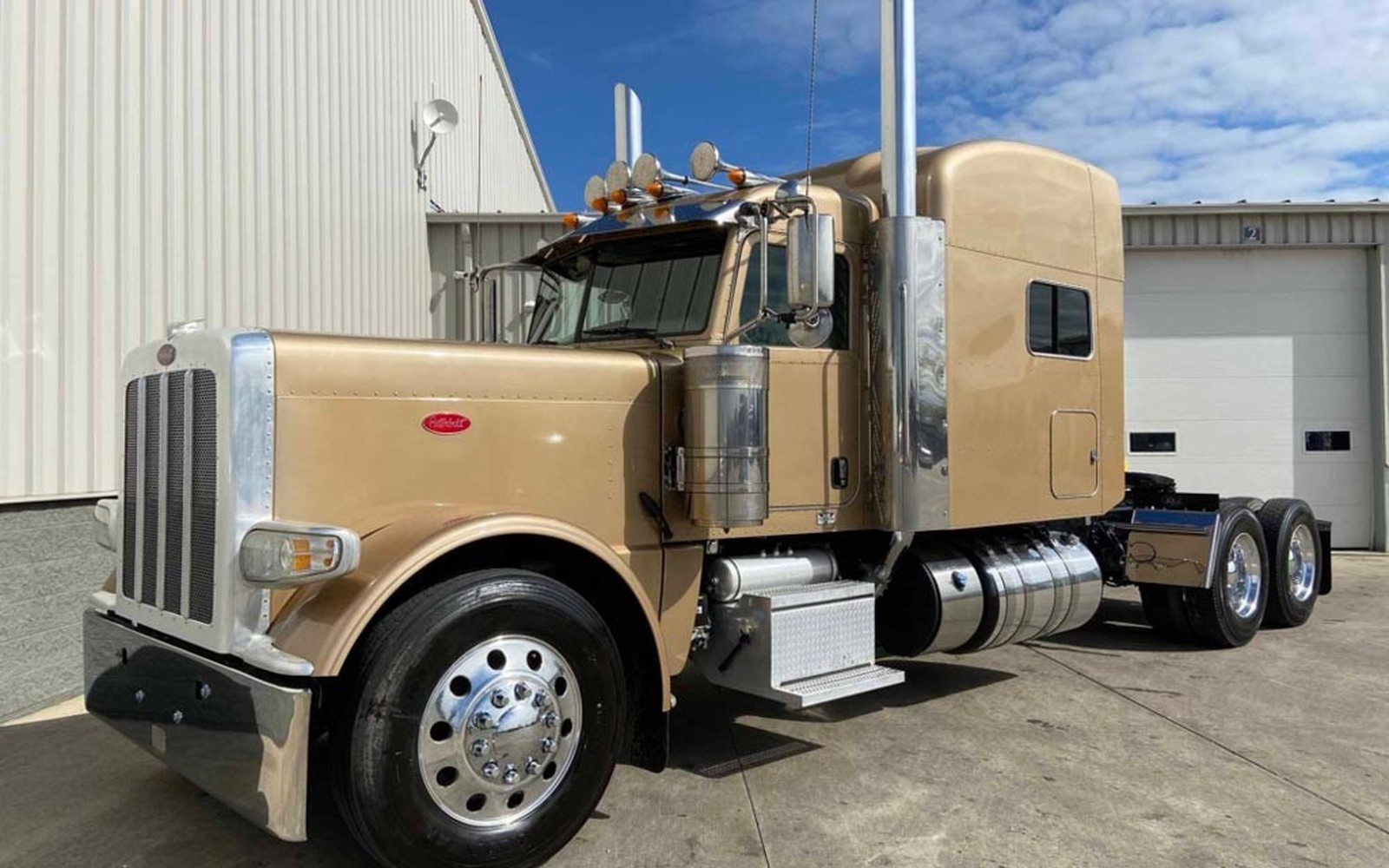
The equity in a Peterbilt 389 is real money. Owner-operators and small fleets with paid-down or free-and-clear 389s are sitting on lendable collateral that the right lender values correctly. We connect you to that lender, close the deal in about two weeks, and put the cash in your account while the truck keeps rolling.
The 389 occupies a specific tier in the trucking world: it's the flagship long-hood Peterbilt, built for owners who want the full classic aesthetic alongside a modern powertrain. Most 389s run Cummins or PACCAR MX engines, and buyers at auction consistently pay more for clean, well-documented 389s than for comparable-year conventional trucks with less brand recognition. That premium resale position is directly relevant to refinancing, because higher market value means more equity to work with. For a broader look at the brand, see our Peterbilt truck refinancing overview.
Minimum deal size: $50,000. Application-only approval up to roughly $400,000. B and C credit borrowers are considered based on the full picture. Three months of bank statements is the primary document requirement alongside the application.
Peterbilt 389 pricing on the used market consistently runs above comparable Class 8 conventionals because of what the truck represents to owner-operators: prestige, durability, and personal identity. Buyers pay a premium for that, which means the market value floor is higher than it would be for a less-differentiated truck. Lenders who understand the trucking market recognize this and price their loan-to-value ratios accordingly.
The 389 is available in set-back and set-forward front axle configurations, and the 0.27-inch aluminum cab panels and aerodynamic add-ons vary by spec. What matters for refinancing is the combination of documented miles, engine hours, maintenance history, and any major repairs or accidents on the title. A well-documented 389 at 500,000 miles can refinance more favorably than a poorly documented one at 300,000.
Operators running the 389 as a sleeper cab tractor in long-haul lanes understand that the truck is a significant investment. Getting that investment to generate capital without selling it is exactly the point of refinancing.
Most callers fall into a few categories. Owner-operators who've had the truck for three-plus years, paid it down, and want cash for a second truck, trailer, or working capital. Small fleets with two to five trucks who want to lower their total debt service cost. And operators who bought a 389 with dealer financing at a rate that made sense at the time but looks expensive today relative to alternatives.
The Owner-Operator Truckers segment is particularly active here. These are people who identify with their truck, don't want to sell it, and want to extract capital from an asset they plan to keep running for another five years. The refinance lets them do that. Some use the proceeds for a trailer purchase, others for home improvements, others for a down payment on a business investment. We don't restrict how you use the cash.
Operators in markets like Dallas and Phoenix, where freight demand runs strong and owner-operators are competitive in spot market lanes, often refinance 389s mid-year when cash positions tighten seasonally. The capital bridge covers fuel, permits, or new contracts without forced downtime on the truck.
We move the file from submission to decision in days. Funding after approval typically runs one to two weeks, which includes title work and lien recording. If the machine has an existing lien, we coordinate the payoff directly and handle that administrative layer so you don't have to chase it.
The file we need: completed credit application, three months of business or personal bank statements (most owner-operators blend the two), existing loan payoff statement if applicable, and basic truck details including VIN and approximate mileage. If the deal is above about $400,000, we may ask for additional income documentation, but most 389 refinances fall below that threshold.
If your situation involves bad credit or a recent event like a judgment or late payments, the B and C credit equipment financing path is still open. We submit to lenders who specialize in non-prime borrowers and work equipment as collateral. The terms won't be prime, but funded is better than not funded when you need the capital.
For operators comparing options, a Equipment Sale-Leaseback on a 389 can generate a larger upfront cash amount than a standard refinance, because the leaseback price is based on closer to full market value rather than a percentage advance. Some operators choose that route specifically for its larger lump-sum outcome, accepting the title transfer during the lease period as a reasonable tradeoff for the capital they need. We model both options so you have real numbers to compare before you commit.
Send us your VIN, mileage, current payoff if any, and three months of bank statements. We run the numbers, submit to the right lenders, and come back with real terms fast. Cash-out equipment refinancing on Class 8 trucks is something we do consistently. The 389 is one of the better collateral assets in the trucking world. Let us prove what it's worth.
These are the underwriting points the desk uses to turn the taxonomy page content into a real cash-out structure.
Peterbilt 389 Refinancing value, serial, configuration, hours or mileage, payoff, and comparable sales.
$50. The available cash is based on verified value minus the existing payoff.
Two weeks.
We move the file from submission to decision in days.
Yes. High mileage reduces appraised value but a clean, documented 389 at 600k can still carry meaningful equity and qualify for refinancing.
If market value exceeds the payoff by enough to support a transaction, yes. We pay off the existing note and you receive the net proceeds.
Yes. Use of proceeds is unrestricted. Many owner-operators fund trailer purchases this way.
LLC-titled trucks are eligible. The credit review includes the individual guarantor, but the title entity itself is not an issue.
Not for every deal. Large or high-mileage transactions may require a third-party inspection, but most close on documentation alone.
Send the machine, payoff, and target cash-out amount. We will review the file and come back with rate, term, payment, and net proceeds.
Tell us what you are buying, who is selling it, and when you need it earning. We will review the file and point you to the next step.