Collateral Reviewed
Revenue-producing equipment already working in the operation, with payoff and current value documented.

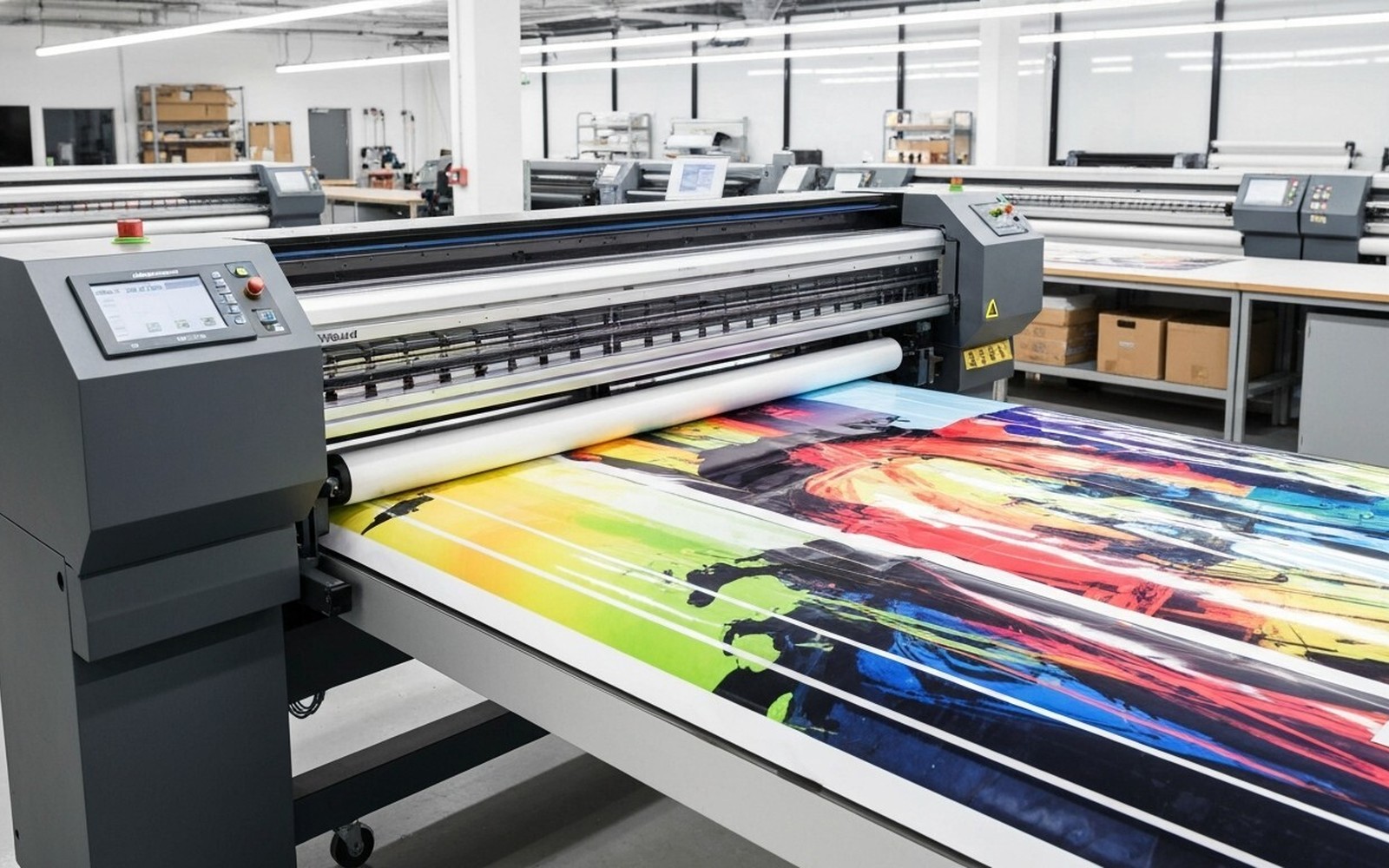
Offset presses, digital production equipment, cutting and folding lines, and flexographic presses represent years of capital investment. A printer who has been paying on a large-format offset press for three years has equity in that asset right now. The same is true for a packaging converter running a flexo press with two years of paydown behind it. Cash-out equipment refinancing converts that equity to capital without touching the press run.
We work with commercial printers, label converters, flexible packaging companies, corrugated box manufacturers, and specialty packaging operations. The equipment class spans the full press room: litho, digital, flexo, gravure, along with bindery, die-cutting, folding, and converting equipment. Most of it qualifies as collateral when value and equity support the transaction.
Minimum transaction is $50,000. Printing and packaging operators typically access $100,000 to $500,000 per transaction depending on the equipment involved. Funding from a complete file takes one to two weeks.
The press room and converting floor contain significant capital assets with established secondary market values. Primary equipment categories we lend against:
Highly specialized or proprietary equipment configurations may require a more conservative loan-to-value approach due to limited secondary market depth.
Printing and packaging companies face ongoing capital pressures from two directions: technology refresh cycles and market consolidation. Press technology does not stand still, and a commercial printer who bought a press three years ago is already thinking about the next platform upgrade. Extracting equity from the current press funds that transition without requiring the printer to wait for a sale.
Packaging converters are in a different dynamic: e-commerce growth has driven demand for corrugated and flexible packaging, but serving that demand requires capacity. Additional presses and converting lines cost seven to eight figures at full capacity. Equity from existing assets funds the down payment or bridges the gap between a contract award and the equipment delivery date.
Printing and packaging companies in manufacturing-dense markets like Chicago, Indianapolis, and Charlotte have active customer bases that drive the capacity investments this capital structure supports.
Documentation starts with three months of business bank statements and an application. For printing equipment, we need the press manufacturer, model, configuration (number of units, total width, printing process type), year, and current payoff. Specialized equipment may require a dealer or lender appraisal, but we do not require you to pay for that upfront before we tell you whether a transaction is viable.
We pull secondary market comps for your specific equipment and come back with a term sheet. If the terms work, we move to documentation and closing. Funding typically arrives in one to two weeks from a complete file. For transactions above $400,000, financial statements are part of the package. Below that, application-only processing keeps it simpler.
Printers who want to compare a cash-out refinance to an equipment lease structure, particularly for digital equipment where the technology cycle is shorter, should review the information on capital lease versus operating lease options to understand the tradeoffs.
Commercial printing companies sometimes carry credit profiles shaped by industry consolidation: companies that absorbed a smaller competitor and took on its debt, or operators who invested heavily in digital equipment during a transition year and carried higher debt ratios during the ramp-up.
We work with B and C credit. B/C credit equipment financing is available for printing and packaging operators whose credit score does not reflect the current strength of the business. Bank statement cash flow and asset quality drive the underwriting in those situations.
For operations carrying multiple equipment notes from different press acquisitions, a debt consolidation structure may reduce total monthly outlay and simplify cash flow management. We look at the full picture when we evaluate your application.
Tell us the press, the configuration, what you owe, and what the capital is for. We come back with a real structure the same day you apply. The press keeps running. The capital starts working.
These are the underwriting points the desk uses to turn the taxonomy page content into a real cash-out structure.
Revenue-producing equipment already working in the operation, with payoff and current value documented.
$50. The available cash is based on verified value minus the existing payoff.
One to two weeks.
Working capital, down payments, debt cleanup, slow-season coverage, and project mobilization.
Heidelberg presses are known for long service lives and have one of the deepest secondary markets among printing equipment. A 12-year-old Heidelberg in good working condition is still a real collateral asset with meaningful secondary market value. Age and hours alone do not disqualify it. The combination of manufacturer reputation, press configuration, and documented maintenance history drives the valuation.
Yes. Digital press technology moves faster than offset, and model supersession does affect residual value. A superseded model may be valued more conservatively than current-generation equipment. That affects the loan-to-value ceiling but does not eliminate the equity position if you have paid down a meaningful portion of the original cost.
Yes. A blanket lien across a press and its supporting bindery and finishing equipment can often produce a larger combined transaction than the press alone. We evaluate each piece and structure the total based on the combined collateral.
A flexo press and converting equipment in one transaction is a standard structure. Both assets would be included in the collateral pool with a blanket lien. The loan amount reflects the combined equity across both pieces.
A documented, one-time cash-flow disruption from a major customer loss is context we account for in underwriting. If the current picture shows recovery, we look at the last three months as the primary cash-flow indicator and treat the prior year event as context rather than a defining characteristic. Apply and let us see the current situation.
Send the machine, payoff, and target cash-out amount. We will review the file and come back with rate, term, payment, and net proceeds.
Tell us what you are buying, who is selling it, and when you need it earning. We will review the file and point you to the next step.