Collateral Reviewed
Fanuc R-2000iC Industrial Robot Refinancing value, serial, configuration, hours or mileage, payoff, and comparable sales.

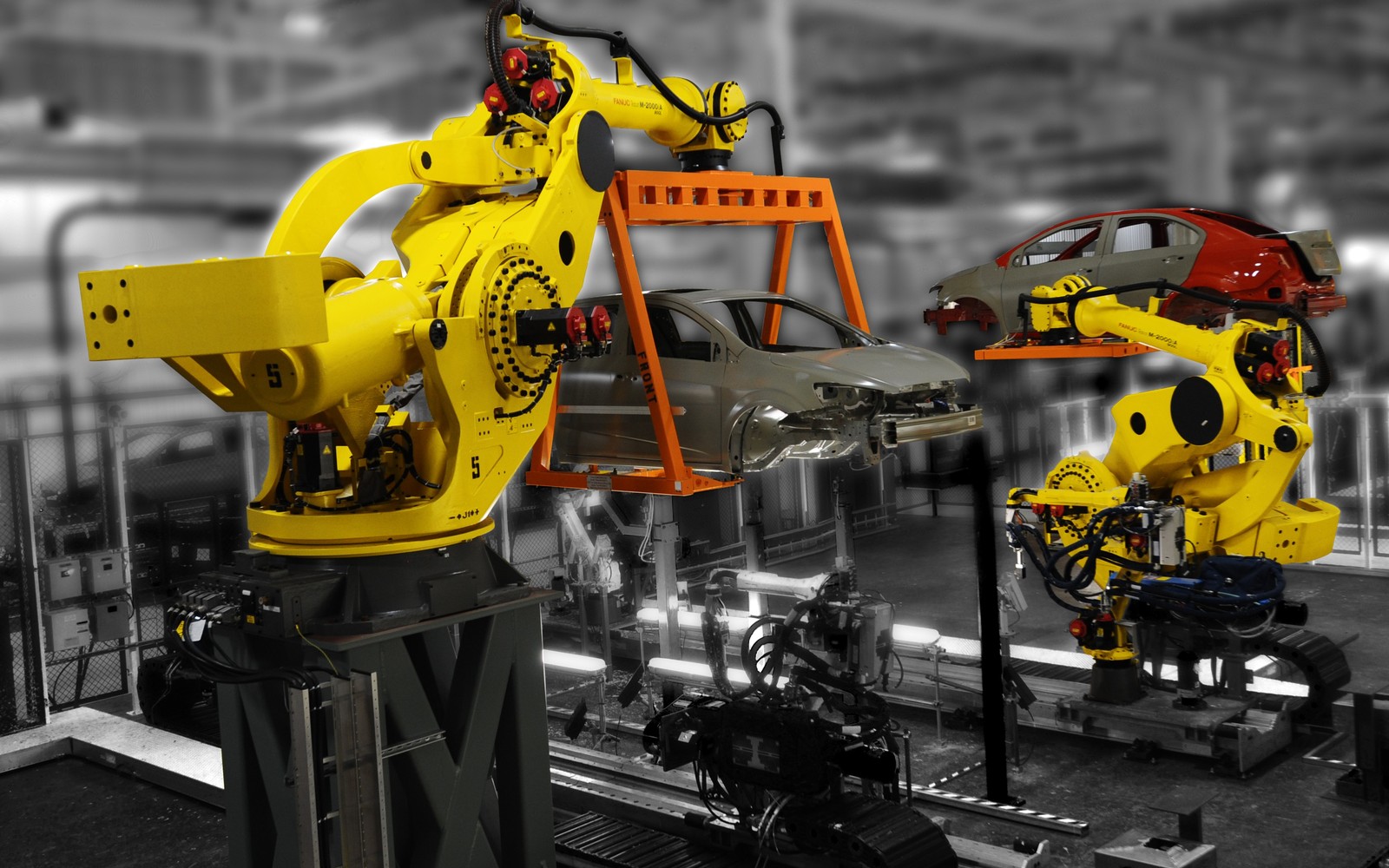
An industrial robot that's running at full utilization is generating revenue in every cycle. A Fanuc R-2000iC that you've been paying on for two or more years is also generating equity. Those two things can work simultaneously: the robot produces parts, and the equity produces capital for your next automation investment. We convert that equity into cash in about two weeks without taking the cell offline.
The Fanuc R-2000iC is one of Fanuc's high-payload articulated robots, designed for spot welding, material handling, machine tending, and assembly applications that require both substantial reach and significant payload capacity. The iC series, which includes variants like the R-2000iC/125L and R-2000iC/165F, has broad adoption in automotive body assembly, general manufacturing, and foundry and casting environments. That wide deployment means lenders with machine tool and industrial equipment experience know the model, know the market, and can underwrite it confidently.
Minimum deal: $50,000. Application-only to approximately $400,000. Three months of bank statements and the application are the starting point. B and C credit reviewed on the complete picture.
Fanuc robots carry strong brand recognition and a reputation for long service life, often running well into the 100,000-hour range with proper maintenance. That longevity is part of what makes them retain value in the secondary market. An automotive integrator replacing an older Fanuc robot doesn't throw the old one away. It either rebuilds it or sells it to a buyer who puts it to work in a lower-precision application. That secondary market keeps values real.
The R-2000iC's payload range runs from roughly 125 kilograms to 270 kilograms depending on variant, with reach typically in the 2.6 to 3.5 meter range. These specs make the machine versatile across application types, which means the buyer pool for used R-2000iC units is broader than a single-application specialty robot. Broader buyer pool means more liquid collateral, which means more favorable refinancing terms.
Operators in manufacturing and fabrication, particularly those running automated welding cells or machine tending applications, often have R-2000iC units that have been deployed for three to five years. At that point, the original financing is typically well paid down and a meaningful equity position exists. That equity is doing nothing until you refinance it.
Robot refinancing follows the same basic structure as any equipment refinance: we assess current market value, apply a loan-to-value ratio, subtract any existing payoff, and advance the net amount to you. The complexity with robots is that the value of the R-2000iC is partly tied to the cell it's in, the end-of-arm tooling it runs, and the programming that makes it useful for your specific application. A bare robot at market value is different from a tooled, programmed, proven robot in a running cell.
When you apply, we want to understand the full cell configuration: controller model (R-30iB is the most common current generation), end-of-arm tooling type, cable dressing condition, and any workcell integration details. That information helps us present an accurate picture to lenders who might otherwise apply a conservative discount for unknown condition.
If you prefer a Equipment Sale-Leaseback structure over a standard refinance, we model that option too. A leaseback on a fully operational, tooled, and programmed R-2000iC cell can generate a larger upfront capital amount than a refinance advance, because the leaseback price is closer to full market value. Some operators use leaseback proceeds to fund a second cell or to cover the integration cost of a new automation project.
Tier 2 and Tier 3 automotive suppliers running spot welding and transfer applications. Metal fabricators who use the R-2000iC for machine tending on large CNC machining centers. Foundries and die casters using it for part extraction and handling. And general manufacturers who've built automation cells around the robot over the past several years and now want to use those assets to fund the next phase of expansion.
The manufacturing and fabrication operators who call us are typically growth-stage shops that used the R-2000iC to scale production without adding labor headcount. That ROI story is often very clear, and it makes for a compelling underwriting narrative when the credit history has gaps or the score is below prime. B and C credit equipment financing is available here because the collateral is strong and the business case is usually solid.
Shops in markets like Detroit, where automotive automation runs deep, or Greenville, where foreign automotive OEMs have brought supplier demand into the Southeast, are well-represented in our robot refinance deal flow.
These are the underwriting points the desk uses to turn the taxonomy page content into a real cash-out structure.
Fanuc R-2000iC Industrial Robot Refinancing value, serial, configuration, hours or mileage, payoff, and comparable sales.
$50. The available cash is based on verified value minus the existing payoff.
Two weeks.
Working capital, down payments, debt cleanup, slow-season coverage, and project mobilization.
Yes. We lend against the robot's serial number and controller as the primary asset. Tooling and fixturing are secondary considerations.
High utilization shows business need but increases hours. Good maintenance documentation helps offset the hour count in the appraisal.
No. Third-party integrations are standard. The integrator's role is a deployment detail, not a title encumbrance.
Yes. Many operators use refinance proceeds to fund deposits or full purchases of additional robot units.
Yes. Cross-collateralizing two robots in one facility can simplify the lien structure and may produce better total terms.
Robot model and variant, controller generation, approximate hours, current payoff, and three months of bank statements. That starts the file. We price it across industrial equipment lenders who understand robotics and come back with real terms. Cash-out equipment refinancing on automation equipment is a growing part of our work. Your R-2000iC is producing parts every cycle. Let's make sure it's producing capital too.
Tell us what you are buying, who is selling it, and when you need it earning. We will review the file and point you to the next step.